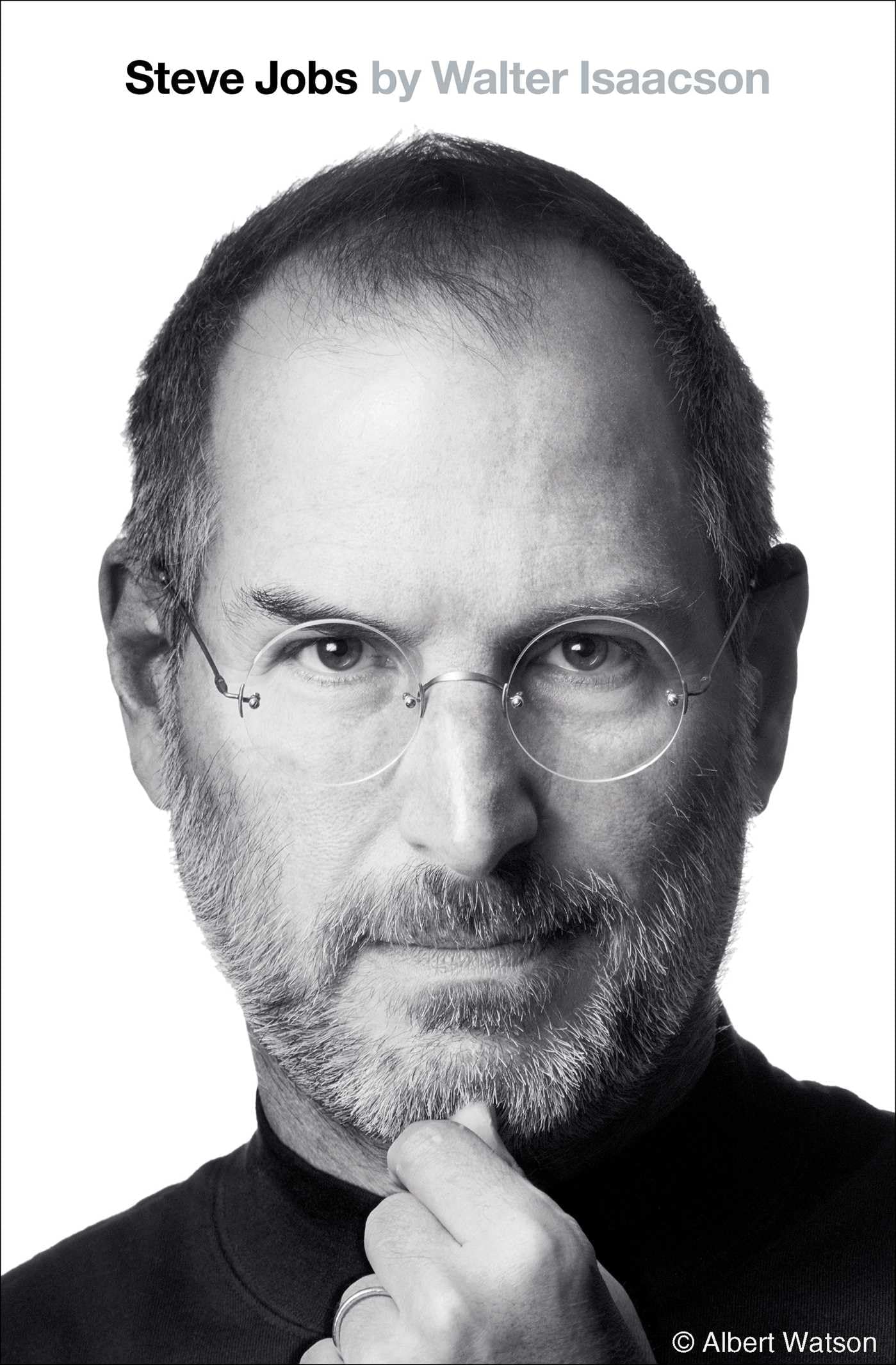
Steve Jobs
Product ID: 1854
🏆Top 10 in Tech Biographies
💡6 industries revolutionized
📚40+ exclusive interviews
Desertcart purchases this item on your behalf and handles shipping, customs, and support to Gibraltar.
🚀 Unlock the mind behind the world’s most iconic innovations — before everyone else does!
Walter Isaacson’s bestselling biography of Steve Jobs offers an unparalleled, deeply personal look at the visionary who reshaped six major industries. Drawing from over 40 interviews with Jobs and 100+ insiders, this book reveals the genius, flaws, and fierce drive behind Apple’s cofounder. A must-read for professionals seeking lessons in innovation, leadership, and the complex human story behind the tech revolution.


| Best Sellers Rank | #20,981 in Books ( See Top 100 in Books ) #4 in Computing Industry History #4 in Computer & Technology Biographies #8 in Technology (Books) |
| Customer Reviews | 4.7 out of 5 stars 26,834 Reviews |
I**F
Jobs is a Four Letter Word
Many people might mistake this book for a mere biography of the man that made Apple a household name and its products coveted by millions around the world. It's not. This book is actually three books in one. It's a business book on how to (and not to) run a company using Apple, NeXT and Pixar as case studies. It's also a history book on the ascent and the drama behind the consumer electronics evolution. And as its title suggests, it's the fascinating story of one of the most gifted people of our time. As a business book, Isaacson writes about three distinct business practices. The first is how to really create a company from scratch. The passion exuded by Jobs and Wozniak is detailed with infectious enthusiasm in the first half of the book. The second practice (and one often not talked about in business books) is how to drive a company to the ground. The book is rife with examples of internal politics, lack of leadership and the absence of focus that truly illustrate how companies fail. The last practice is how to build and operate a creative company that endures. For me, this is the most fascinating narrative of all. But to fully appreciate it, one must truly understand the first two, which almost always precede this one. The book offers a great case study of three companies: Apple, NeXT and Pixar. One fascinating vignette in the book draws a contrast between Apple and Sony and why Apple was successful in conquering the consumer-end of the music business while Sony, who was in a favorable position to do exactly that, failed to do so. This story draws attention to the importance of inter-departmental cohesion that Apple possessed and Sony didn't, to the success of innovation in a company. Business leaders reading this book will learn a lot about the power of "focus" in business. Steve Jobs's most doled out advice was "focus." Throughout the book, we learn how Jobs followed his own advice to a deadly fault. As a business book, it is amongst the best. It's also an even better history book. It details the ascent of personal computing from the perspective of the very people that were (and still are) at its helm. The book doesn't only cover Apple's evolution, but that of the entire industry. Naturally, that involves drama, which Isaacson does a great job of covering. The philosophical divide between open and closed systems that dominated the personal computing evolution is discussed thoroughly in the book via anecdotal accounts on what really happened behind the scenes. It explains what it really took to bring us the products on which I read this book and now writing its review. Most importantly, this is a very personal book. It is the story of man adored by millions of geeks, and when departed, mourned by hundreds of millions of Apple consumers around the world. Unfortunately, a devastating portrait that is guaranteed to put out any respect or admiration you've ever had for the man emerges early on in the book. If you have spent the last fifteen years romanticizing about Steve Jobs and his products, this book will leave you punch-drunk. You will learn through stomach-churning details how Steve Jobs was a disloyal, lying, backstabbing, vindictive, manipulative, vengeful, and all-around vile and damaged human being. He was, and surprisingly so, a coward, as clearly illustrated by how he treated people in his twenties and thirties. And oh, he cried a lot. I mean, A LOT. The book is rife with examples of his cruelty towards those who he seemed to have loved the most. His treatment of Steve Wozniak was unconscionable and disgusting. But the most disturbing example and the one that really shows his character was how he treated his "soul mate" from Reed College, Daniel Kottke. I could sum it up by quoting John Scully's wife when she told Jobs: When I look into most people's eyes, I see a soul. When I look into your eye, I see a bottomless pit, an empty hole, a dead zone. Even the amiable, most trusting co-founder of Apple, Steve Wozniak, who's been backstabbed by Jobs several times, have said about Jobs, "I look forward to a great product and I wish him success, but his integrity I cannot trust." The irony in Steve Jobs story was that he loathed people that treated him the way he treated others. He had to deal with a few people that gave him a run for his money like Eisner of Disney and Katzenburg of DreamWorks. He claims throughout the book that he's "honest" and a "straightshooter" yet all the stories relayed by people that had to deal with him tell a completely different story. For a control freak, it boggles me how he allowed such a book to be written about him. Now we all know that he might have been a visionary, but he was also a very disturbed man void of compassion, empathy and integrity. As I got deeper into the book I started to wonder, "did Apple offer on-campus Al-Anon meetings to its employees?" Evidently, working for or with Steve Jobs was like being in a relationship with a recovering Cocaine addict who sees the world in black and white and throws frequent tantrums that are aimed at destroying those around them. It's what Mike Murray, Apple's Marketing Chief, called, "management by character assassination." Jobs quotes Bob Dylan, whom we learn early in the book was one of his heroes, "if you're not busy being born, you're busy dying." It's ironic to quote those powerful words and not heed them. The book clearly shows that Steve Jobs was never really reborn or reinvented as a person. He never evolved and his base qualities were never tamed. Naturally, he spent his entire life dying from the inside out. The book left me enriched, provoked and sad in equal measure. It is long but flows well and is a fast read. All business executives should read it for the insight it offers on what real successful companies are made of and what pitfalls to avoid along the way. Also, everyone in technology should read it to get a perspective on the evolution in the space of personal and consumer computing and to understand where we're headed and how to get there. Even if you're not an executive or a geek, you should read this book for its fascinating (and well told) story of a man from Northern California who dramatically changed how we live. A man as rich with creativity and intuition for what consumers want as he was bankrupt of decency and compassion for most of those he touched. It's a story worth reading. If for nothing else, read it to understand what it took to create the device on which you're reading this very review.
L**N
Excellent! Required reading for anyone wanting to manifest his/her dreams!
I read this book because it was the September selection for my book club. I am not normally drawn to biographies so I don't think I would have read this book had it not been a selection for book club. This is one of the biggest reasons I enjoy being in a book club. I read books I might not otherwise have read. I absolutely loved this book. I loved the subject matter. Steve Jobs is a modern day Da Vinci. He may even be greater. He changed the world. Hundreds of years from now he will be remembered as the pathfinder and visionary he was. I loved the way the book was written. I will read other books by this author. I could not put this book down. I learned so much about computers. I was raised a PC gal. I gradually embraced Apple. My first apple products were the Macbook Pros I bought for my children when they went off to college in 2007 and 2008. Then I bought one. I found it easy to use once I let go my fear of change. then I bought the I Phones for the kids and then me. Then I got a free I Pad mini when I went solar. I am on my dream vacation/experience right now. I am living in Paris for three months. My laptop, i-phone and i-pad mini are with me. Yes, I could just use one, but I am still learning and leaning on all three. When I get back state side I will buy a Mac for my desk top! I laugh when I hear "once you go Mac, you don't go back!" This is my experience. Reading this book confirmed my experience. And I learned even more about operating systems and the closed vs open debate still going between Apple and Microsoft. Sorry Bill, I am on the Apple closed approach for now. I feel that is why I don't get viruses like I have gotten with Microsoft . But the book offered more. I got to see a visionary at work. I love the way Jobs created. I know he was difficult and demanding and a wee bit eccentric. But that was part of the whole package. He displayed a laser like focus when he created his products. And he kept the future of these products in the hands of those who created them and not the "salesmen." Yes, Steve Jobs was remarkable and this book captured my interest like no other in a long while. I saw the movie here in Paris. I liked it. I think Ashton Kutcher did a great job. But Jobs was bigger than this. The movie only covered his first apple computer and the Mac. There was no mention of the i-Pad or the "1000 songs in your pocket," the I Phone. Any one of thee products would have guaranteed Jobs a well deserved place in history. But all of them? well, he is the ultimate "hall of famer" in the digital-communication age in my book. I think this book should be required reading for anyone who wants to manifest his or her dreams.
J**S
A Superb Biography Of A Dysfunctional Genius
I am not sure that anyone from my generation is a proper person to review or really appreciate a biography of Steve Jobs. Mine was the generation where mother made toast in the oven; many a telephone call was made on a phone on which you called "Central" and were connected; news came either from the newspaper delivered to the door morning and evening or from the Saturday Evening Post or maybe Colliers Magazine, nothing more; and I can't remember anyone who had a radio. Over the years, of course, that has changed and those of us who are left from the generation to which I refer have become accustomed to most but certainly not all of the gadgets of modern technology. Yes, some can use computers and maybe even a cell phone, but the iPod, the iPhone and the iPad are still in the iCloud for most of us; and those are the instruments that Jobs essentially created and gave to us. If we use them at all we don't use them with the effortless ease, the spontaneity, or the cheerful aplomb of our children, grandchildren and great grandchildren. So I have read this biography with a certain caution, not sure that I have fully appreciated the immense changes the man has brought to our society, not sure, for instance, that I completely understand the significance between an open and closed platform or grasp the elegance of the design of the iPad, and not sure that I can fairly evaluate the man and his work. One thing I am sure of, however, is that the black nature of the man makes a fair judgment of his work difficult and that, important as he was, there were others too - mentioned but not honored in the book - who were equally important , equally talented and equally entitled to share the technology stage with him. This being said, however, I have no problem with appreciating good writing and the exercise of superlative literary and personal judgment on the part the author of this biography, a book which presents an accurate word picture, warts and all, of a major figure, an innovator, a mover and shaker of twenty first century technology, someone who "knew what the public wanted before it knew what it wanted". Even before he began this project, Walter Isaacson had been a solid biographer of Benjamin Franklin, Henry Kissinger, Albert Einstein and others, working mostly if not completely from secondary sources. Here, however, in his Jobs biography he has worked primarily from original sources. He talked to Jobs - more than forty interviews or conversations. He talked to his former colleagues, his friends and his enemies, the Jobs family near and far, his business associates. In short as a skilled reporter, a former editor of Time and President of CNN he was no lightweight interviewer. Nor, because of his journalistic experience was he any lightweight when it came to putting it all together in an intelligent, readable and accurate story of a man who was his own worst enemy and who has helped define our present by his genius. Speaking of genius: When the seeds of genius are sprinkled among the human race at birth one hopes that the human vessel which receives them is normal - think Leonardo Da Vinci, J.S. Bach. Wm. Shakespeare, among others - but sometimes the vessel is flawed; and the vessel that was Steve Jobs was flawed beyond any conventional ability to forgive. He was eccentric and narcissistic to the line beyond which lies madness. He was unforgiving, cruel, selfish, unsympathetic, and disloyal to friends and associates. Only to his wife and children, to his adoptive parents and his sister Mona did he exhibit any sign of love or affection. He had no sense of humor, no humility, no gentility and no love for his fellow man or for his life or for that of others. In short, as a person he was simply terrible. And I doubt he ever experienced happiness - even for a moment. Triumph? Maybe. But Solace? Love? Tenderness? Peace? Never! I cannot imagine a sadder life. Yet his genius, his insights, his instincts and his uncontrollable work ethic gave us the best tools - the Mac, the iPod, the iPhone and the iPad - with which to navigate and to find our way in the huge fathomless sea of data and information , the sea of music, art, literature and experience which lies by our bedside and at our doorstep.. So when you read these 600 pages - and I hope you do - forget the warts on the man, enjoy the story and the way it has been told by a brilliant writer and be aware that this is a once in a lifetime opportunity to read the life story of one of the most brilliant, beguiling, eccentric and important innovators of our time written by one of our very best biographers.
J**D
A damned good read....
First and foremost, this is just a good read. I found that Isaacson's bio of Einstein was both interesting and did a profoundly better job of explaining relativity than my physics professors ever did. This book didn't disappoint. It was both captivating, and offered meaningful insight into Steve Jobs and the history of Apple. On way of my own biases, I was an Apple bigot before being an Apple bigot was cool. I learned to program on an Apple II that my father brought home in 1980. I've been a shareholder since I was given a single share of Apple stock for my bar mitzvah in 1981. I later grew up using Macs in college for everything from writing papers to digital circuit simulation to writing shareware apps that paid off debt I had accumulated as a starving grad student and provided the down payment on my first home. I even continued to use a Mac (eventually a PowerPC clone) as my exclusive home computer during most of my tenure with IBM! But around 1998-99, I finally gave up on Macs and bought my first PC. By then I had concluded that Windows hadn't simply caught up, but in many regards had surpassed the Mac. Mac had become a lesser computer that cost a premium, for which applications were fewer in number, and cost more. Even after Apple finally made substantial improvements and moved to a Unix kernel, I've never been tempted to look back. What's more, as Apple entered the consumer electronics domain and began producing closed devices and systems characterized by excessive proprietary control, I developed a decidedly anti-Apple viewpoint. Not a reflexive anti-Apple bias -- I did eventually start using a hand-me-down iPod when my daughter just had to upgrade to a iTouch. And we eventually all got iPhones after I concluded that, whatever it's limitations, it was still a better option than the available Android alternatives. But you get the point -- I'm now closer to being an anti-Apple bigot than one of the hordes of Apple fans. This book provides real insight into why Apple systems are as closed as they are, and why Apple acts as controlling as it does. It provides a good understanding of just how Steve Jobs drove Apple to where it is today. Ultimately, the book does not paint a flattering picture of Jobs. I've read other reviewers who complained that Isaacson clearly disliked Jobs, and that the book was a hatchet job. I've seen Isaacson doing interviews since Jobs' death, however, and if anything, I'd say the opposite is true. I think he actually holds Jobs in awe. (Those who find the description of Jobs as such an unrelenting jerk incompatible with the extremely strong positive feelings expressed by many who worked with him have clearly never worked with somebody of his ilk, and fail to recognize something basic in human psychology. When people go through what is effectively prolonged hazing, one of two things happen: either they part ways prior to completion, in which cases they are left only with enormous resentment over the hazing/bad behavior, or they survive the hazing and feel empowered and strongly bound to the others involved, as a result. What you would expect from those who worked closely with/for Jobs is precisely a polarized love or hate reaction. But even those who come out with strong positive feelings will still very much recognize, and likely even resent, the bad behavior.) I've also seen complaints that the book gives short shrift to specific events or aspects of Jobs' life. That strikes me as inevitable. The book is ~600 pages as it is. I think the purpose of the book is to provide meaningful insight into Jobs, including what formed him and what he formed, not to comprehensively document each and every aspect and occurrence of his life. Are there places where the book is lacking? Yes, I think so. The book suggests that there was a substantial change in Jobs -- a maturation -- between his initial stint with Apple and his second run there. But if he became more reasonable and effective at his interpersonal interactions with Apple employees in his second stint, that certainly wasn't apparent to me from the book. In any case, whatever its limitations, and whatever your feelings toward Apple or Steve Jobs, this book is enlightening and entertaining, and well worth the read. P.S. For the record, this is the first book I've read in it's entirety on an eReader. (A Kindle Fire -- perhaps there's some irony there.)
R**I
Incredible, even sensational, motivational book
Book review by Richard L. Weaver II, Ph.D. This is a fascinating, if not riveting, story that is not only well-written and well-constructed (organized in a chronological manner), but it is incredibly well-researched, too. It not only revealed how open Jobs was with Isaacson, but how open all of those who were part of, influenced, or were on the fringes of Job's life, were when Isaacson interviewed them. From reading this book, you get this intricate portrait of a mercurial, sometimes vicious, self-absorbed, genius who had serious difficulties dealing with the realities of day-to-day living. But, it is Jobs' peculiarities--his uniquenesses--that make this book so engaging. You simply have a hard time believing such a person like Jobs even existed! (Remember, Jobs did not read this book before he died.) One aspect of Jobs' personality--reinforced throughout the book--was that "ordinary rules didn't apply to him" (p. 313). I found it astonishing, for example, that he couldn't be relied on to tell the truth. It was said about him by Helmut Sonnerfeldt, "He lies not because it's in his interest, he lies because it's in his nature" (p. 313). He was adept at misleading, being secretive, as well as being brutally honest. He could be incredibly brutal! Whatever you thought about Steve Jobs--based on his public persona--this book will shake (destroy?) that image. Isaacson pulls no punches, nor do the individuals interviewed. Jobs was a temperrmental, insensitive, authoritative, control freak, with an emphasis on freak! Sure, he was incredibly bright, imaginative, creative, intelligent, educated, and knowledgeable, but the way he treated others, the way he thought about others who were not his intellectual equals (or intellectual superiors!), was near pathological and perverse. He was an egomaniac's egomaniac (terribly selfish and demanding). To give you a mere glimpse of how selfish he was, he seldom remembered anniversaries or birthdays (p. 530). Jobs was not one to emulate when it comes to effective human relations, however, even though many of his personal eccentricities were not exemplary, this is a motivational book. There are a number of great motivational messages throughout the book. Some of the messages include: never give up, create a vision or dream, pursue your dream, whatever it takes, surround yourself with great minds and supportive personnel (not just "yes people"), don't worry about going against the grain, be creative, take risks, defy failure, bet your career on doing things in a different way, be hands-on, know your product, be thorough, check-and-re-check, perfectionism is good and it works, have passion, infuse everything you do with emotion, focus, prepare thoroughly, do nothing half-assed, and always keep your customers in mind (be user friendly). Jobs knew that "deciding what not to do is as important as deciding what to do" (p. 336). On the basic values Jobs supported--and a value seen in every Apple product which he oversaw (and a value that made Apple successful!)--is the effective marriage between technology and the humanities (p. 527). The marriage was consummated in the silicon architecture, in the Aple organization, as well as in Jobs' own soul (p. 527)! If you really want an overview of who Steve Jobs was and how he operated, Isaacson does a beautiful job of summarizing in Chapter 42, "Legacy" (pp. 560-571). It is an honest, complete, and intimate conclusion that accurately and completely draws together many of the comments, reactions, and insights scattered throughout the book. It is a wonderful closing chapter. In this final chapter, too, Isaacson allowed Jobs, who had shared with him what he hoped his legacy would be throughout the course of their conversations, to be the one to conclude the book (pp. 567-570). No, there are no completely new insights in Jobs' essay, because you absorb his personal values, approaches, feelings, and reactions throughout the book, but Isaacson was correct, just hearing Jobs express himself at the end was a beautiful, warm, and touching way to conclude the book. Just as Jobs was a true genius (very few measure up!), Isaacson is a genius in the manner with which he introduces him to the general public. This is truly an incredible book.
A**R
Amazing story of a complex man
With the exception of one laptop and 2 non-smart cell phones, in my personal and professional life since 2004 I've had nothing but Apple products - computers (both desktop and laptop), iPads, iPods, and my crown jewel: my iPhone. None has ever disappointed me. I say this not to put forth a review of the Apple products but to explain that I am part of Steve Jobs's choir: I value, respect and rely on the products that he created. I'm sold, so to speak. And so it seemed only logical that I would eventually read this book to gain insight both in the genesis and evolution of Apple and in the person of Steve Jobs. The book did not disappoint in either. What I found out about the early years and the development of the personal computer was fascinating. I do remember a lot of the news articles from those years - I was living in San Francisco at the time and a good friend of mine worked for Apple - but I would not consider myself previously knowledgeable about Apple in any comprehensive way. I learned so much of the nuts and bolts of Apple Computer, Inc., from this book. The chapters about the creation of the iPod, iPhone and iPad were very interesting to someone who has used these products for years and years and feels she has some proficiency using what they offer me. But the insight I gained from the book on Steve Jobs the man left me very sad. While I consider him to have been a true genius with an almost other-worldly imagination, I can't imagine that I would have liked him very much or respected him outside of his professional arena. As the founder and developer of Apple Computer, he was spectacular. He had an intense imagination, vision, and belief in things that had yet to be discovered. He was fortunate enough to find those people who had the same precise work ethic that he did. To find those people and to hone the abilities of the ones who stayed, he had no reservations about crushing their substandard efforts or their feelings. The ones who lasted were the ones who believed in his vision and their Jobs-given opportunity to indulge and demonstrate their own creativity. The ones who lasted were the best and brightest the tech and artistic world had to offer. The ones who lasted were the ones who took his ideas and made them into our reality. I am profoundly grateful to them and to him for the advances they made in technology and artistry. And I guess the one cannot exist without the other. Without his exact personality would the tech world have been turned on its ear and eventually controlled by Apple? I don't know. Actually I doubt it. In terms of his family, it seemed as if his attention to them was given only when it was not required or demanded elsewhere. His children were discussed very little; the same is true about Laurene Powell, his wife. But it is clear that in his wife he found the one person who was his equal in intelligence and commitment. Their marriage is portrayed as strong but him as absent. The sections on his cancer and eventual death were moving but not enough to make me feel for him as a person. I am sorry he died but my sorrow has to do with the loss of him professionally and what he might have accomplished and achieved had he lived but not with the loss of him as a man. And yet I can recognize his genius and I'm glad I read the book.
G**T
Masterful look into the life of an imperfect and flawed genius
I would not have been considered as part of the `target market' for Walter Isaacson's new biography of Steve Jobs. I knew very little about Jobs. I am at best a point and click MicroSoft computer user and really only have a vague idea of what an operating system is. I began reading this book because over the last 4 years, I have been told I look like Steve Jobs, maybe a hundred times. I was actually pulled out of line by the TSA last year at Seattle-Tacoma Airport and brought through a special line. I thought I was going to be searched but as I was walking through, the TSA agent said, "I am praying for you, Mr. Jobs." I laughed and told him I appreciate the prayers but I was not Mr. Jobs. He then asked to see my license. He didn't believe me. I have worn black turtlenecks for years. I didn't know Jobs wore them. I hate to shave, so usually have a face full of stubble. I only pull out a razor when I am speaking (I am an author and professional speaker) or have a "suit and tie" business meeting. I began wearing glasses full-time in 2008 and the mistaken identity began almost immediately. My only other connection to the man is that I love my iPhone. The publicity surrounding his death increased the "do you know who you look like?" questions by ten times. During a recent walk through Midway Airport in Chicago, the young lady at the ticket counter said, "I know everyone must tell you that you look like Steve jobs, right?" As I walked to security, the TSA agent looked at me and asked if I was a celebrity impersonator. I said "No, but I do get mistaken for John Wayne often." Then, as I loaded into the Southwest flight, one of the flight attendants was looking at me and walked up with her copy of the book and held it up to my face and asked, "Are you trying to look like him?" I assured her I was not. I then told her that I bet Steve was often mistaken for me. She looked at me and responded, "Nah." So when I landed in Dallas, I downloaded this book on my new Kindle and the unexpected happened - I was mesmerized. People will say in reviews, as a standard line, "I could not put this book down." We all know they certainly were able to put it down ... but never in my life have I been so captivated by a book. Walter Isaacson has performed an incredible service in his skillfully writtten examination of a life. It is structured perfectly, flows beautifully and is a brutally honest look at a brilliant man who will become a colorful part of our cultural history. Through most of this story, I did not like Steve Jobs but tolerated his arrogance and rudeness as part of what makes this story great. Then came the point in the book where I realized it is not arrogance if it is true and I believe Steve Jobs to be a genius. I feel sorry for those who loved and respected him but suffered his wrath and continued to do so because of their loyalty to him and the "Apple Idea." I despise him for the rejection and denial of his first daughter and know she will suffer for the rest of her life because of both his actions and inactions. I feel sorry for him because of the joy his daughter could have brought to his earlier life, that he chose to miss. Yes, he tried to make up for it later, but I think those are the kinds of losses that can never be regained. As the book progressed, I still did not like him, but the tremendous respect I felt for his accomplishments and intellect blossomed. Steve Jobs is the most interesting human being I have ever encountered, even though my only introductions are through this book ... and being occasionally misidentified as him. However, Walter Isaacson's skillful masterpiece is more than enough. Through Isaacson's insightful eyes and his carefully chosen and crafted words, I feel I have personally met a man that will be remembered as an American icon and revered for generations to come. Through this book, I witnessed a combination of his genius and severe personality defects in a way that displayed, what I believe is, a complete picture of Steve Jobs. When I began reading this book, the LAST thing I ever expected to say was this ... "This is the best book I have ever read. Period." Go figure ... I would have never guessed.
J**E
Steve Jobs
I am not a fan of Apple. I have never bought any of their products, and I have never thought much about Steve Jobs even though I grew up a child of the 80's and 90's. I have always been a PC user and now use Android. I find it fascinating that Apple considered itself the "good guys" when comparing itself to Microsoft, IBM, and these days Google. While I do believe the quality of a product can be higher when you are controlling the end to end experience, I never agreed that they should be the ones deciding what you should do with the item you purchased. Apple tells you how you are going to use their product and you either take it or leave it. When Steve Jobs didn't like Adobe Flash, he didn't put it on Apple products. He made a choice that was yours to make, not his. Apple put out the iconic "1984" ad basically saying Apple was going against the establishment, but to me they were the ultimate example of control and that has made me uninterested in buying their products in the past. I still find myself fascinated by the life of Steve Jobs now that I'm a little older and that's what made me finally decide to purchase the book. Steve was a very unique individual, and that's both a good and bad thing. In some areas he was definitely a genius. I would also say he was eccentric and a narcissist. If you read about many very intelligent people throughout history there were often dark sides to them almost as if the unique aspects of their minds had to be balanced by issues in other areas. Some say Jobs was a functioning psychopath. I have no idea if I would go that far, but its obvious from reading the book that while he was very good at what he did, something was also kind of off. I cant logically make sense of an intelligent person like him falling for so much nonsense when it came to food and dieting like he did. The biggest issue is, not surprisingly, the way he treated people. Years ago I would have condemned Jobs, but my own experiences in life have caused me to have mixed opinions now. How successful would Apple have been if Jobs did not act the way he did? We can only guess, but I'd be willing to bet good money not as successful as it turned out to be. I had the displeasure of working for an executive that was truly ignorant and arrogant towards the people below him. I left the company because I would not treat my people that way and do not agree with it, but I also believe that you cant always be the nice guy if you want to truly be successful. Yes, I do believe Steve Jobs went over the edge with this at times, and I could never be like him, but accountability is important, and when you are just the nice guy people take advantage of you or don't take situations as seriously as they should. Steve didn't accept less than the best and he was very brutally honest about it with the people around him. These days I feel like there is a little bit of Steve's style in the way I do things and that is ok. There needs to be balance in all things, but for Steve everything was very black and white and that pushed him to extremes most people would not feel comfortable using in their own lives. I have read many of the one and two star reviews and find myself disagreeing with some of the points made in those reviews. I don't see the book as being all negative and avoiding the good things about Steve's life. It just stated things as they were. Intelligent people can put the pieces together and each of us has to come to our own conclusions after reading the book. He accomplished some amazing things in his life and he seemed to truly enjoy what he did. On the other hand, most of his life he was not a great family man, and he was not that great to the people around him which has brought out some extreme opinions from those who worked with him. I didn't read the book and think wow this guy was a horrible person. I actually have a better opinion of Steve and Apple after reading the book. I may even buy one of their products after reading the book. He was an imperfect person in many ways, but he also accomplished things that most of us can only ever dream of. I now wish I had the opportunity to spend time with him and really see what he was like and learn from him. I did find a few things about the book a little weak. Like some other reviewers, I do think the book should have gone chronologically more and bounced around less. It just seemed to skip over some things or barely mention them and a couple of times a first name would be mentioned and I wasn't sure who it was and found myself going backwards trying to figure out if the person was mentioned before. I also agree that the style of the book changed when I made it to the last 20% or so, as if they were in a rush to release the book after his death. I would like to have seen more thoughts from Jobs near the end and more from his family, though I do agree with how the book ended. At first it seemed kind of odd and I expected more, but ending it at the point Isaacson last visited with Jobs was actually the most respectful ending he could have given. Overall the book is very good and will leave you deep in contemplation once you are done as to what kind of person Steve Jobs really was. The good and the bad. The extremes in his life and how he dealt with people in general. Again, I finished the book and came away with a greater respect for Steve Jobs, and I think if you can read between the lines a bit and really spend some time thinking about what you read, you will also come away having some different thoughts regardless of whether you like or dislike Jobs or Apple. The book may not be perfect, and we are only spectators who were not a part of Jobs life, but the book accomplished what it needed to, and the overall experience combined both sides of Jobs into something dignified. That's all it needed to do.
K**R
Absolutely magnificent
This book is among the greatest books I've ever read, perhaps because I admire Steve Jobs so much and he is one of my role models. He was truly a genius and that's what Walter Isaacson's books are about. This is a very long book and it took me ages to finish it but the good aspect of this experience was that I was living with it as I read it. I loved the beginning, Macintosh story, and the final stsges of the book the most. I felt like losing someone close when I read the Epilogue. I love biographies but Walter Isaacson has taken the geniuses' biographies to a whole new level. I can't wait to read his Leonardo's book.
H**C
COMENTARIO SOBRE PRODUCTO
MUY INSTRUCTIVO
A**X
Un'affascinante immersione nella vita di un visionario
Ho appena terminato di leggere "Steve Jobs: The Exclusive Biography" e sono ancora completamente immerso nel mondo affascinante di uno dei più grandi innovatori del nostro tempo. Questo libro, scritto con maestria da un autore esperto come Walter Isaacson, offre un'analisi approfondita della vita e delle opere di Steve Jobs, il co-fondatore di Apple. La biografia è un'autentica pietra miliare che riesce a cogliere l'essenza di Jobs come persona e come leader carismatico. Isaacson ci conduce attraverso un viaggio emozionante, partendo dall'infanzia di Steve Jobs fino ai suoi trionfi e fallimenti nel mondo degli affari. L'autore non si limita a raccontare una sequenza di eventi, ma ci fornisce una comprensione intima di chi era realmente Steve Jobs e di cosa lo ha spinto a diventare l'uomo che ha cambiato il modo in cui viviamo e lavoriamo. Uno degli aspetti più notevoli del libro è la sincerità con cui vengono descritte le sfaccettature complesse della personalità di Jobs. Isaacson non esita a mostrare i lati negativi del suo carattere, evidenziando la sua determinazione quasi ossessiva e il suo carattere spigoloso. Questo rende la narrazione ancor più coinvolgente, poiché ci permette di apprezzare appieno le sue realizzazioni straordinarie, ma anche di riflettere sulle conseguenze che il suo approccio può avere sulle relazioni personali e professionali. La ricerca di Isaacson è encomiabile e la sua abilità nel raccogliere testimonianze e interviste di persone vicine a Steve Jobs aggiunge una dimensione autentica alla narrazione. Sono rimasto affascinato dai retroscena di Apple e dalle interazioni tra Jobs e altre figure chiave come Steve Wozniak e Tim Cook. La biografia offre una panoramica completa degli alti e bassi dell'azienda, comprese le decisioni coraggiose e i momenti di scontro che hanno plasmato l'industria tecnologica. Inoltre, il libro affronta tematiche più ampie come l'importanza del design, l'innovazione e l'arte nella creazione di prodotti che cambiano il mondo. È stimolante leggere di come Jobs abbia integrato la sua passione per l'estetica nella filosofia di Apple, creando prodotti che hanno ridefinito gli standard dell'industria e hanno influenzato il modo in cui viviamo e ci connettiamo.
J**I
Absolutely perfect
Last Christmas I had asked Santa for a Samsung smart phone. Apart from an ipod, I don't own any other Apple products and felt the brand is trying to make you buy all of their devices. Would I have wanted an iphone after reading the book? I had ordered the English version of the book on Amazon, something I strongly recommend. The computer related terms are English words anyway and the author's style is straightforward and without the use of complicated sentences. It took me a couple of weeks to read through the 600 pages of the book. It is like reading a drama: somehow I was waiting to read about all the products we are so familiar with now: the ipod, iphone and ipad. Once the book reached these chapters, I slowed down a bit, as if a climax had been reached. The book is amazing, probably the best biography I have ever read. The is partly due to the author and his style of writing, but mainly the life and personality of Steve Jobs is what makes that book stand out for me. I did not know much about Jobs before and was not too keen to find out about him either, but now I have started reading newspaper articles and watched old clips on Youtube about him and the Apple brand. The story is simply fascinating. It all starts out in his garage and ends up in one of the biggest brands of our time. Jobs could achieve this by being the person he was. The last biography I read was about Picasso and it is amazing how similar they might have been. Genius on one side, cruel, manipulative and mean on the other side. Jobs had asked Isaacson to write this book in 2004, probably aware that someone will write about him if he dies of cancer and by choosing Isaacson (former chairman and CEO of CNN, author of biographies of Einstein, Kissinger and Franklin) he made sure to have one of the best writing about him. This is the way he choose people he wanted to work with at Apple as well, he just calls up the person who he thinks is best for a certain job. Jobs did not want any control over the book, fully aware that Isaacson will also write about how mean he could treat even his closest fiends. Over two years Isaacson collected the material, doing many interviews with Jobs and people close to him. The book covers his childhood, private life and his career. What made a big impression on me: Jobs attention (you could call it obsession) to detail in everything (food, clothes, architecture, design, presentations, advertising) The way Jobs built his team (choosing the best, firing who is not good enough any more) What surprised me: Jobs deep love for Bob Dylan What I missed: I would have wished for more background information about what happened elsewhere at the time of the early computing since there was not only Apple. This is probably a lot to ask, since one book would not have been enough. I googled some people and companies Jobs had dealt with in order to find out more about them to complete the picture. To Isaacson's credit: all the big names seem to have a place in his book and a brief summary on what they were doing at the time (for example Bill Gates). Once I had finished the book there were no open questions, sometimes the author deals with a different person in a different chapter and you find out about it a little later in the book. After all I can say: I am very happy with my smaller phone and the open strategy works for me.
A**S
Très long...trop long ...mais fascinant
Il y a beaucoup de "storytelling" ce qui est merveilleux ... toutes ces petites histoires qui créent ce personnage très complexe et son «champ de distorsion". Je le recommande pour ceux qui aiment: des histoires d'affaires, l'esprit entrepreneurial, des gens créatifs, non-conformistes, les stratégies, les commerçants, vendeurs, etc ..... et bien sûr, toute autre personne qu'il est ouvert à une telle histoire et à la culture américaine (sachant qu'il y a beaucoup de scepticisme autour de la culture américaine en France ... oui oui, je sais que je généralise :)). Il s'agit d'un très long livre (568 pages) et croyez-moi, la lecture sur un Kindle ne facilite pas les choses. Mais il y a toutes les détails que vous pourriez avoir besoin : commençant par des témoignages et points de vue différents sur la même histoire jusqu'aux détails de la façon dont ils ont travaillé sur les couleurs et les composants utilisés pour chaque ordinateur. En outre, c'est un livre très inspirant ... bien sûr, si vous ne restez pas coincé dans la perspective «il est fou ou il est égoïste ou il ne se soucie pas de ceux qui travaillent pour lui ou que ça marcherait jamais en France ou qu'il est allé trop loin ". Bref...J'adore
Trustpilot
5 days ago
1 week ago